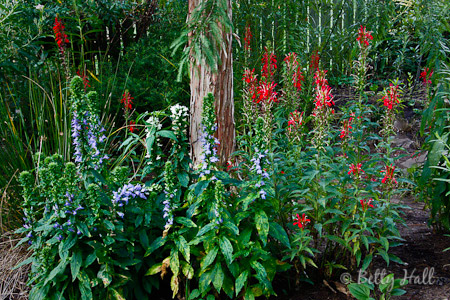
I’m enjoying the bright red Cardinal Flowers (Lobelia cardinalis) and Great Blue Lobelias (Lobelia siphilitica) that are blooming around the Bald Cypress tree (Taxodium distichum) in our rain garden.
 According to Tom Barnes, author of Wildflowers and Ferns of Kentucky, Cardinal Flowers “may be the best hummingbird-attracting plant in the state.” I’ve enjoyed seeing Ruby-throated Hummingbirds (Archilochus colubris) feeding on our plants. I’ve discovered that photographing them is indeed a challenge, but managed to get this image.
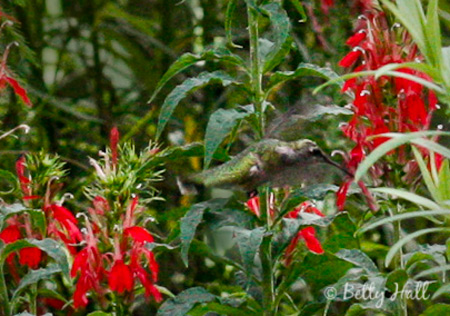 Hummingbirds are one of my favorite birds and it’s great fun to have them in the backyard. I try attracting them with feeders but we see them much more often on the native plants. Cardinal Flowers are one of my favorite native plants and the fact that they draw hummingbirds makes them extra special.
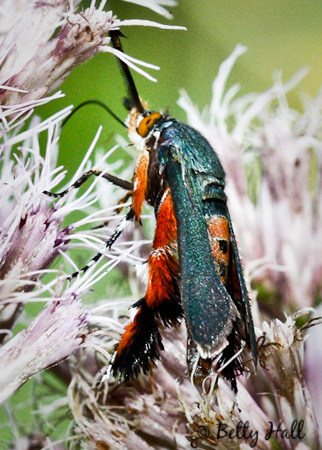
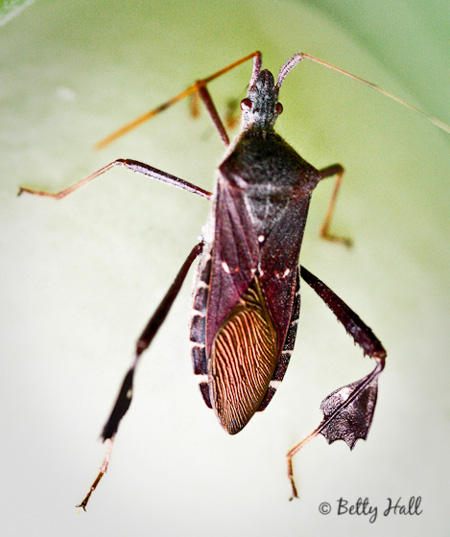 I’m quite impressed with the BugGuide website. It’s an online community of professional and amateur naturalists working together to learn more about insects, and making that information available to others. I think it will be a valuable resource and look forward to using it in my efforts to learn more about all the insects in our backyard.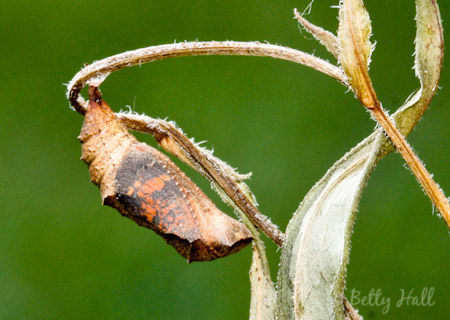
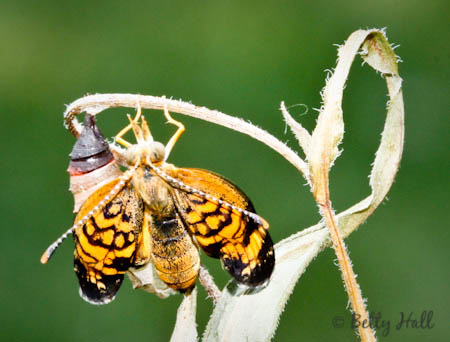
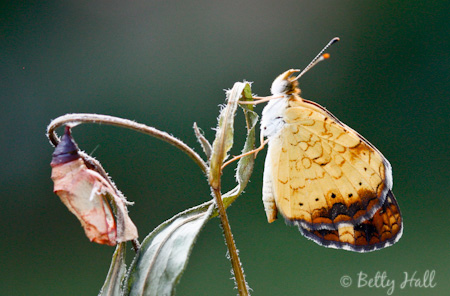
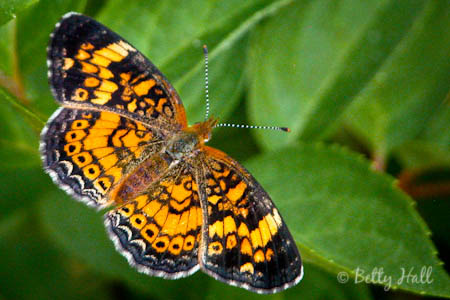 Crescents get their name from the markings near the bottom of the hind wings. At three-fourths inch wide, Pearl Crescents are one of our smaller butterflies. They are also one of the most common in North America.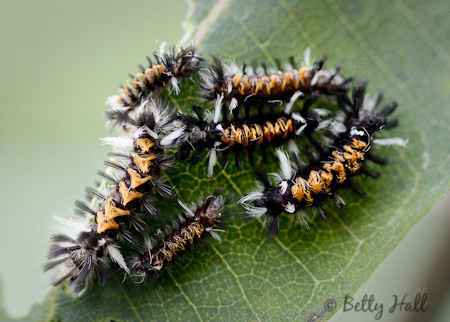
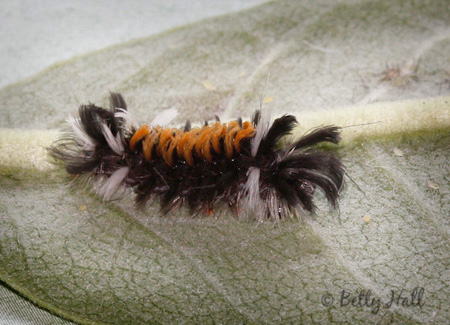 Milkweed Tussock moth eggs are usually laid generously on older Milkweeds while Monarchs generally lay only one or two eggs per plant and prefer younger, more tender leaves.